Science and Engineering: Innovation, Research, Education and Economics

animals bacteria Career commentary computer science cool curiouscat economy Energy Engineering engineering education engineers evolution food fun Funding genes government green Health Care human health innovation K-12 kids Life Science medical research MIT nature ocean physics Products Research Robots Science science education science explained science facts scientific inquiry scientists Students Technology university research USA water webcasts

Curious Cat Science and Egineering blog full tag cloud


November 21, 2009

Florence Nightingale: The passionate statistician

Florence Nightingale: The passionate statistician

She brought about fundamental change in the British military medical system, preventing any such future calamities. To do it, she pioneered a brand-new method for bringing about social change: applied statistics.

he statistics changed Nightingale’s understanding of the problems in Turkey. Lack of sanitation, she realized, had been the principal reason for most of the deaths, not inadequate food and supplies as she had previously thought.

As impressive as her statistics were, Nightingale worried that Queen Victoria’s eyes would glaze over as she scanned the tables. So Nightingale devised clever ways of presenting the information in charts. Statistics had been presented using graphics only a few times previously, and perhaps never to persuade people of the need for social change.

Applied statistics is a tool available to all to achieve great improvement. Unfortunately it is still very underused. As George Box says: applied statistics is not about proving a theorem, it’s about being curious about things. The goal of design of experiments is to learn and refine your experiment based on the knowledge you gain and experiment again. It is a process of discovery.

Related: articles on applied statisticsThe Value of Displaying Data WellStatistics for ExperimentersPlaying Dice and Children’s NumeracyQuality, SPC and Your CareerGreat Charts

November 14, 2009

Teenage Engineer’s Company Launches Safety Stair

Young engineer launches stair aid by Geoff Adams-Spink

A young woman from Sheffield has turned a GCSE coursework project into an award-winning stair-climbing device for older and disabled people. Ruth Amos has launched her StairSteady handrail at Naidex 2008 – the annual disability exhibition in Birmingham.

She told BBC News that she was inspired to create the device for the father of one of her teachers who had had a stroke. She won an award for her idea and has now set up a company to sell it. The StairSteady is a horizontal rail at 90 degrees to the wall or banister that people can hold on to as they go up or down stairs.

The invention was then entered for the Young Engineer for Britain competition and won first prize.

Great stuff. Innovation doesn’t have to be amazing technology. Finding solutions that make people’s lives better is the key. And then showing some entrepreneurship is great, Ruth setup her company when she was 16. I wish her luck.

Related: posts on engineersEngineers Should Follow Their HeartsAutomatic Dog Washing MachineEntrepreneurial and Innovative EngineersMicrofinancing Entrepreneurs

October 5, 2009

2009 Nobel Prize in Physiology or Medicine

This year’s Nobel Prize in Physiology or Medicine is awarded to three scientists who have solved a major problem in biology: how the chromosomes can be copied in a complete way during cell divisions and how they are protected against degradation. The Nobel Laureates have shown that the solution is to be found in the ends of the chromosomes – the telomeres – and in an enzyme that forms them – telomerase.

The long, thread-like DNA molecules that carry our genes are packed into chromosomes, the telomeres being the caps on their ends. Elizabeth Blackburn and Jack Szostak discovered that a unique DNA sequence in the telomeres protects the chromosomes from degradation. Carol Greider and Elizabeth Blackburn identified telomerase, the enzyme that makes telomere DNA. These discoveries explained how the ends of the chromosomes are protected by the telomeres and that they are built by telomerase.

If the telomeres are shortened, cells age. Conversely, if telomerase activity is high, telomere length is maintained, and cellular senescence is delayed. This is the case in cancer cells, which can be considered to have eternal life. Certain inherited diseases, in contrast, are characterized by a defective telomerase, resulting in damaged cells. The award of the Nobel Prize recognizes the discovery of a fundamental mechanism in the cell, a discovery that has stimulated the development of new therapeutic strategies.

Scientists began to investigate what roles the telomere might play in the cell. Szostak’s group identified yeast cells with mutations that led to a gradual shortening of the telomeres. Such cells grew poorly and eventually stopped dividing. Blackburn and her co-workers made mutations in the RNA of the telomerase and observed similar effects in Tetrahymena. In both cases, this led to premature cellular ageing – senescence. In contrast, functional telomeres instead prevent chromosomal damage and delay cellular senescence. Later on, Greider’s group showed that the senescence of human cells is also delayed by telomerase. Research in this area has been intense and it is now known that the DNA sequence in the telomere attracts proteins that form a protective cap around the fragile ends of the DNA strands.

Many scientists speculated that telomere shortening could be the reason for ageing, not only in the individual cells but also in the organism as a whole. But the ageing process has turned out to be complex and it is now thought to depend on several different factors, the telomere being one of them. Research in this area remains intense.

The 3 awardees are citizens of the USA; two were born elsewhere.
Read more about their research at the Nobel Prize web site.

Molecular biologist Elizabeth Blackburn–one of Time magazine’s 100 “Most Influential People in the World” in 2007–made headlines in 2004 when she was dismissed from the President’s Council on Bioethics after objecting to the council’s call for a moratorium on stem cell research and protesting the suppression of relevant scientific evidence in its final report.

Related: Nobel Prize in Physiology or Medicine 20082007 Nobel Prize in Physiology or Medicine2006 Nobel Prize in Physiology or Medicine

Webcast of Dr. Elizabeth Blackburn speaking at Google:
(more…)

September 30, 2009

Movie Aims to Inspire College Students With Tales of Successful Minority Scientists

African American women are still rare in many science professions, despite their increasing representation in undergraduate science classes. The documentary – Roots to STEM: Spelman Women in Science—seeks to explore how these women were able to succeed and to hold them up as role models.

Tarsha Ward remembers begging her mother for a stethoscope so she could be the star of career day at her kindergarten class in Charleston, S.C. Her mother presented her with something that proved more prophetic: a white lab coat.

“For me that was the beginning of a career,” said Ward, who is working toward her doctorate in biomedical sciences at Morehouse School of Medicine in Atlanta, Ga., focused on cancer research. “Ever since then everything was about science.”

“If you get into a bind you have to think it out yourself,” she said. “A Ph.D. has really taught me to think on my own. You’re here thinking in the midnight hours and there’s no book to tell you what’s right. You just have to see if it works.”

Such struggles have already paid off. “In seven months, I published my first paper. I worked on it day and night,” said Ward, a 2004 Spelman graduate. “I (loved) the fact that I could find something no one else could find and actually publish it.”

Read the full press release

Related: Documentary on 5 Women Majoring in Science and Math at Ohio StateNational Girls Collaborative Project for STEMWomen Working in ScienceWomen Choosing Other Fields Over Engineering and MathHHMI Expands Support of Postdoctoral Scientists

June 28, 2009

Barbara Liskov wins Turing Award

photo of Barbara Liskovphoto of Barbara Liskov by Donna Coveney

Barbara Liskov has won the Association for Computing Machinery’s A.M. Turing Award, one of the highest honors in science and engineering, for her pioneering work in the design of computer programming languages.

Liskov, the first U.S. woman to earn a PhD from a computer science department, was recognized for helping make software more reliable, consistent and resistant to errors and hacking. She is only the second woman to receive the honor, which carries a $250,000 purse and is often described as the “Nobel Prize in computing.”

“Computer science stands squarely at the center of MIT’s identity, and Institute Professor Barbara Liskov’s unparalleled contributions to the field represent an MIT ideal: groundbreaking research with profound benefits for humankind. We take enormous pride that she has received the Turing Award,” said MIT President Susan Hockfield.

“Barbara Liskov pioneered some of the most important advances in fundamental computer science,” said Provost L. Rafael Reif. “Her exceptional achievements have leapt from the halls of academia to transform daily life around the world. Every time you exchange e-mail with a friend, check your bank statement online or run a Google search, you are riding the momentum of her research.”

The Turing Award is given annually by the Association for Computing Machinery and is named for British mathematician Alan M. Turing, who helped the Allies crack the Nazi Enigma cipher during World War II.

Read the full article at MIT.

Related: 2006 Draper Prize for EngineeringThompson and Tits share 2008 Abel Prize (Math)von Neumann Architecture and BottleneckMIT related posts

May 17, 2009

Intel Science and Engineering Fair 2009 Webcasts

Tara Adiseshan, 14, of Charlottesville, Virginia; Li Boynton, 17, of Houston; and Olivia Schwob, 16, of Boston were selected from 1,563 young scientists from 56 countries, regions and territories for their commitment to innovation and science. Each received a $50,000 scholarship from the Intel Foundation.

In the webcast, Tara Adiseshan, talks about her project studying the evolutionary ties between nematodes (parasites) and sweat bees. She identified and classified the evolutionary relationships between sweat bees and the nematodes (microscopic worms) that live inside them. Tara was able to prove that because the two have such ecologically intimate relationships, they also have an evolutionary relationship. That is to say, if one species evolves, the other will follow.

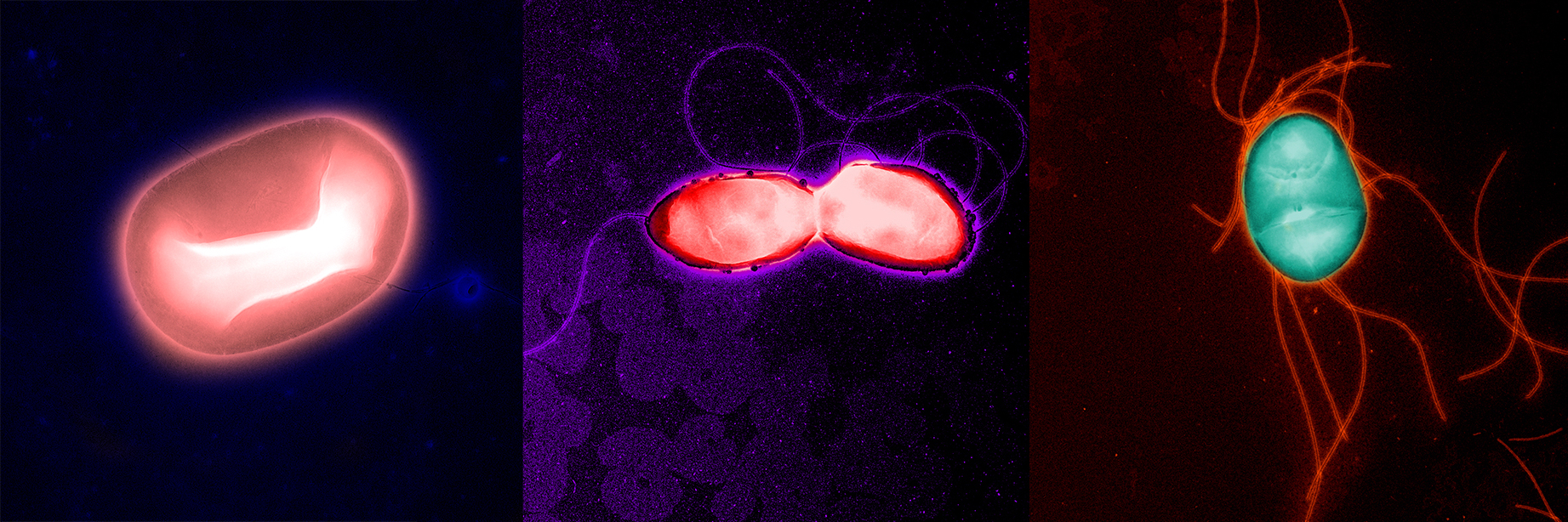
Li Boynton developed a biosensor from bioluminescent bacteria (a living organism that gives off light) to detect the presence of contaminants in public water. Li’s biosensor is cheaper and easier to use than current biosensors, and she hopes it can be used in developing countries to reduce water toxicity.

Olivia Schwob isolated a gene that can be used to improve the intelligence of a worm. The results could help us better understand how humans learn and even prevent, treat and cure mental disabilities in the future.

In addition to the three $50,000 top winners, more than 500 Intel International Science and Engineering Fair participants received scholarships and prizes for their groundbreaking work. Intel awards included 19 “Best of Category” winners who each received a $5,000 Intel scholarship and a new laptop. In total, nearly $4 million is scholarships and awards were provided.

Related: Intel ISEF 2009 Final GalaGirls Sweep Top Honors at Siemens Competition in Math, Science and TechnologyIntel International Science and Engineering Fair 2007Worldwide Science Wizkids at Intel ISEF2008 Intel Science Talent Search
(more…)

March 12, 2009

FreeWave’s Data Radios Bring Employee Bonuses

It is easy with the existing economic news to think things are bleak everywhere. But even within the current climate companies find success. Founded in 1993, FreeWave Technologies is a world leader in the innovative design and manufacture of ISM Band radios and wireless data solutions. Their data-transmitting radios span the globe from the Middle East to Mount Everest; from the Amazon Rainforest to Antarctica to New York. They are used by defense contractors, oil and gas companies, city and county municipalities and industrial manufacturers.

photo of Hedy LamarrHedy Lamarr from the trailer for the film Boom Town, 1940

FreeWave’s data radios are based on Frequency Hopping Spread Spectrum Technology. Spread Spectrum was originally created for the U.S. Navy during World War II to prevent the Germans from “jamming” American radio transmissions for radio-guided torpedoes. The technology was invented by Hedy Lamar, a famous movie star of the 1940’s. The original radios contained a roll of paper slotted like a player piano to cause channel switching. Hedy’s close friend, Inventor/Musician George Antheil, designed the first successful synchronization device that brought Hedy’s idea to fruition. In 1941, Hedy and George were granted a U.S. patent for the first “Secret Communications System.” The original system used merely 88 frequencies. Today, the switching is controlled in embedded firmware code that enables a radio to change frequencies hundreds of times per second and use more than 100 channels.

Engineering these radios is something the company takes quite seriously. And hiring the best talent is part of this philosophy. Every single employee considers it his/her job to ensure that customers receive top-notch service seven days a week. This extends all the way through the organization up to senior management. FreeWave is so dedicated to making its customers front and center that it provides 24-hour technical support – even rotating senior management to be on call at nights and on the weekends.

The privately held company is based in Boulder, Colorado, the company offers network design, pre-installation engineering services and manufactures its own radios (manufacturing them in Boulder).

FreeWave’s increase in revenues of 112 percent from 2003 to 2007. The company has paid this bonus every six months since the first one was paid in July 1995. Over the past year, FreeWave has invested in expanding its facility to accommodate more staff; growing its manufacturing space and capabilities; dedicating more resources and technology to its product development; increasing its customer and partner training; and, investing in marketing and sales.
(more…)

February 24, 2009

Cell Culture Lab Tour

Joanne Loves Science includes many webcasts on science, take a look for yourself. She contacted me through the post ideas page. She teaches mammalian cell culture techniques and the concepts of stem cells and tissue engineering in the Bioengineering Department at the University of Illinois. In this webcast she provides a tour of the cell culture lab.

Related: post on scientists at workTour the Carnegie Mellon Robotics LabCERN Tour webcastYoung Geneticists Making a Difference

January 23, 2009

Student Invents Solar-Powered Fridge

solar powered refrigerator illustration

Student Invents Solar-Powered Fridge for Developing Countries

21-year-old student/inventor/entrepreneur Emily Cummins has designed a brilliant portable solar-powered refrigerator that works based upon the principle of evaporation. Employing a combination of conduction and convection, the refrigerator requires no electricity and can be made from commonly available materials like cardboard, sand, and recycled metal.

Simply place perishable foods or temperature-sensitive medications in the solar refrigerator’s interior metal chamber and seal it. In-between the inner and outer chamber, organic material like sand, wool or soil is then saturated with water. As the sun warms the organic material, water evaporates, reducing the temperature of the inner chamber to a cool, 6 ºC [43 ºF] for days at a time!

After winning £5,000 from York Merchant Adventurers for her idea, Emily delayed going to college for a year to take her refrigerator to Africa for further development.

At 16 Emily won a regional Young Engineer for Britain Award for creating a toothpaste squeezer for people with arthritis, and the next year went on to win a Sustainable Design Award for a water-carrier made from wood and rubber tubing. In 2007 Emily was named the British Female Innovator of the Year, and last year was short-listed for Cosmopolitan’s 2008 Ultimate Women of the Year Competition.

Update: some readers seem confused by what related means below. Those links show previous post to related items and include previous similar designs to keep things cool, including “Refrigerator Without Electricity” which is a clay pot design by Mohammed Bah Abba of Nigeria for the Pot in Pot Cooling System that received the 2000 Rolex award.

Related: Refrigerator Without ElectricityCompressor-free Refrigeratorposts on appropriate engineeringUK Young Engineers CompetitionsWinter Air RefrigerationThe Glove, Engineering Coolness

December 4, 2008

Do Breast Tumors go Away on Their Own?

Do Breast Tumors go Away on Their Own?

Authors of a new study hope to begin a debate challenging the conventional wisdom about early detection of breast cancer. In an article in today’s Archives of Internal Medicine, they ask: Do breast tumors ever go away on their own?

Researchers of this controversial article note that one type of cancer found through screening — a rare childhood tumor, called neuroblastoma — sometimes disappears. In the new article, researchers try to learn if the same phenomenon occurs with invasive breast cancers found with mammograms

The Natural History of Invasive Breast Cancers Detected by Screening Mammography

Conclusions: Because the cumulative incidence among controls never reached that of the screened group, it appears that some breast cancers detected by repeated mammographic screening would not persist to be detectable by a single mammogram at the end of 6 years. This raises the possibility that the natural course of some screen-detected invasive breast cancers is to spontaneously regress.

As with so much medical research the results are not completely clear. Studies need to be followed by more studies, which often lead to more studies. As long as progress is being made this is a perfectly reasonable course of scientific inquiry. And even if progress is not being made this can be perfectly reasonable – finding answers can be hard.

Related: Breastfeeding Linked to More Intelligent KidsDiscussing Medical Study ResultsCancer Cure, Not so Fast

December 1, 2008

Where are the Senior Female Scientists

Why Are Senior Female Scientists So Heavily Outnumbered by Men? by Anna Kushnir

There is some funny math in the world of academic science. Take my graduate school for example: My class was made up of eight people — seven women and one man, or 7 to 1. He was Snow White and we were the seven dwarves — each with a remarkably appropriate nickname. I was Grumpy, should you be curious to know.

Snow White and at least four of the dwarves have continued on to postdoctoral research jobs. That is a 4 to 3 ratio of women who went on to do a post-doc to those that chose alternate career paths.

Everything is adding up so far, right? Lots of women are around. Lots of science is being done. All is well. The next set of numbers is slightly puzzling, however. That is the ratio of female to male professors in our department, at a well-respected academic institution, is 48 to 7 men to women.

The proportion of female faculty in her department, 14 percent, is exactly equal to the overall average from the top fifty US chemistry departments.

From her blog: Lab Life: I thought I wanted to be “normal”

The majority of researchers, in my experience, think that stress level, pressure, and time commitments all drop by a factor of ten the moment you step outside of the chemical-smeared walls of a lab. I have come to realize that’s a misconception. It’s just not true. I think that whenever one wants a career instead of a job, time, stress, pressure, and worry are the price to pay.

If all I wanted was a job with a steady income, I am pretty sure I could get it. I would be well-rested and calm, but would I be happy? Would I be alright staying put where I am, with nothing pushing me to reach the next step or rise to the next level? I don’t think so.

I have heard the words ‘ambition’ and ‘drive’ described as derogatory, when applied to people. Unfortunately, I think those are apt words to describe me (in addition to ‘tired’ and ‘often occasionally cranky’). It was an important thing for me to understand about myself and come to terms with. It’s just who I am.

Related: A Decade of Progress for Women in ScienceWomen Working in Scienceposts on scientists at workWomen Choosing Other Fields Over Engineering and Mathscience internships

November 22, 2008

National Girls Collaborative Project for STEM

The National Girls Collaborative Project for science, technology, engineering, and mathematics (STEM) collaborates with those seeking to increase the participation of girls in STEM feeder activities. The goal is to encourage girls to pursue careers in science, technology, engineering, and math.

Collaboration as a Means to Building Capacity: Results and Future Directions of the National Girls Collaborative Project:

The purpose of the NGCP is to extend the capacity, impact, and sustainability of
existing and evolving girl-serving STEM projects and programs. The NGCP is structured to bring organizations together to compare needs and resources, to share information, and to plan strategically to expand STEM–related opportunities for girls.

Although we are still refining it, the NGCP collaborative model has shown its effectiveness through increased collaboration and minigrant projects with sustained results. As we have described, the success to date of the NGCP in developing collaborations has been demonstrated via data from the collaboration rubric, mini-grant reports, and metrics that show how collaborative activities have increased over the duration of the NGCP projects. As NGCP expands over the next few years to provide regional collaboratives across the entire United States and Puerto Rico, we will continue our assessment of its impact and hope to be able to report its influence on building capacity to attract and retain girls in STEM.

I support programs encouraging STEM activities for girls – and boys. NSF data shows for 2005 shows women outnumbered men in undergraduate degree in science and engineering. For post-graduate degrees men still outnumbering women but that gap has been reducing and seems like it will continue to. And the representations in the workplace seem poised to continue to show a reducing number of men and increasing number of women. Engineering is an example of an area with far more men than women graduating – the imbalance is equivalent to the imbalance the other way for psychology.

Related: Girls Sweep Top Honors at Siemens Competition in Math, Science and TechnologyFIRST Robotics in MinnesotaKids in the Lab: Getting High-Schoolers Hooked on Science

November 18, 2008

Scientists With Lots of Monitors Onboard Ship

photo of computer monitors onboard ship

Fun blog by Linds, a geophysicist, with fun name and tagline: PhD = Pretty huge Dork There’s no crying in grad school! I enjoy including some posts on scientists at work (and plan on trying to intentionally do more of that). The photo shows her office onboard ship – pretty impressive. I thought this monitor was cool.

The boat is a steel monster about 400 feet long. There’s three decks, with cabins, the galley and mess hall, a few different labs, a movie room, reading room and a weight room with white padded walls. It’s all very “Life Aquatic“, if you get the reference. [those that don't follow the link its a crazy movie - John]

We have been in transit for the past three days, getting our computers and systems up and running. We arrive at our first deployment spot tomorrow morning at 5:30 am. That is when we’ll put our first ocean bottom seismometer (OBS) down. The OBS itself is a sphere about 16 inches in diameter made of inch thick glass–these suckers are heavy! It’s vacuum sealed with the instrumentation inside and attached to an anchor. When we are done with the survey, the sphere is timed to detach from the anchor and it’ll float to the surface of the water. Our boat will pull up alongside it and we’ll scoop it out with a net and crane.

woke up today at 3am to get ready for my first watch. We definitely have the worst seas that we have had so far. We are definitely pitching and rolling out here! We deployed our first OBS at 5am and are doing about 1 instrument/hr for the next 24 hours.

Those snippets are from various posts on the blog. Another from earlier:

But there is recent good news: that lone female professor (who is an amazing researcher and is highly respected in the field, chairs many committees both nationally and within the department and was president of the Geological Society of America in the 90′s) has been named the new department chair. I think this move is important in encouraging talented women scientists to apply for positions within the department and shows dedication on the part of the higher-ups to highlighting ‘diversity’ as a priority.

Related: Giant Star Fish and More in AntarcticaBeloit College: Girls and Women in ScienceA Career in Computer ProgrammingDiversity in Science and EngineeringSo, You Want to be an Astrophysicist?Dr. Tara Smith

November 10, 2008

Documentary on 5 Women Majoring in Science and Math at Ohio State

In the clip, Jennifer Jones, a civil engineering student who talks about her challenges and determination to overcome obstacles in her honors program at Ohio State University. The clip is from Gender Chip Project, a documentary following 5 women majoring in the sciences, engineering and math at Ohio State University.

Related: Women Working in ScienceWomen Choosing Other Fields Over Engineering and MathGirls in Science and EngineeringFixing Engineering’s Gender Gap

October 14, 2008

Mentors Prepare Women for Construction Career

photo of Heather Cavitt

Mentors prepare women for construction career

Now Cavitt and other women in the construction school, a part of ASU’s Ira A. Fulton School of Engineering, can give themselves another advantage: Learning from pioneering women who have already risen to leadership positions in the business.

The school recently established its Advancing Women in Construction program, a key part of which is a mentorship project. More than 70 women – and several men – in the construction industry in the greater Phoenix area have signed on to mentor female students and provide them an inside look at life in the industry.

plan to increase female enrollment from less than 15 percent of total enrollment to 30 percent – or about 200 female students – within five years.

Cavitt says her favorite things about the school’s construction management program are the opportunities to learn beyond the classroom, such as internships and building-project competitions between construction students at other universities. She expects the mentoring program to add significantly to the value of her college education. “I’m excited to learn about the real-world business of construction from women who have been successful at it for many years,” she says.

photo: School of Construction student Heather Cavitt (front) will gain from the experience of Crystal Slawson (center), president of Phoenix Pipelines and Natalie Palmer, the company’s project coordinator, through the school’s Advancing Women in Construction mentorship program.

Related: Beloit College: Girls and Women in ScienceWomen Choosing Other Fields Over Engineering and MathWomen Working in ScienceFixing Engineering’s Gender Gap

July 16, 2008

Beloit College: Girls and Women in Science

photo of chemistry lab

Girls and Women in Science at Beloit College in Wisconsin:

sixth grade girls, along with their teachers and parents. This award winning conference encourages the exploration of science and mathematics by middle school girls through two days of experiments, activities, and interaction with science professionals. The girls, teachers, and parents will work with Beloit College faculty, students, and alumnae.

Girls getting into science

Eaton said the 24 girls participating will be able to take an active role in the laboratories. It’s critical the girls are encouraged and get the chance to increase their risk-taking abilities without boys.

The problem is, Eaton said, that sixth-grade girls’ interest in science starts dwindling and boys start becoming more dominant. “The boys take over the hands-on projects and the girls take notes,” Eaton said. “Boys will answer a question more authoritatively. Girls pose answers as a question. They are not as confident in their answers.”

To help foster activity among girls, the weekend conference also offers several workshops for parents and teachers. The workshops teach adults what they are doing to discourage girls and how they can learn to encourage them more.

Related: Science Opportunities for StudentsScience Camps Prep GirlsBuilding minds by building robots

Curious Cat Science and Engineering Blog © curiouscat.com 2005-2008 powered by WordPress
USA High School Alumni

Internal Links

Categories

Author


John Hunter

Other

Search Blog

Web Search

Science and Engineering web search

Recent Comments

  • Marl: Thank you for posting the article oh ADHD! My daughter was diagnosed with ADHD in kindergarten. The...
  • Anonymous: It’s so funny when they fall over! I wish I had a few robots to clean my house each week :)
  • Will: It still suprises me that solar products arent more widespread, especially since it can save you,...
  • Olga Lopez: Geeze guess there is some truth to the upcoming generation being the “RitalinR...
  • marbella: I agree that remaining isolated for a very long time can kill the emotional attachments of a...
  • Josefina Agüello: My thinking for the 15% estimate was derived from the ranking factors released last year...
  • Anonymous: This is too amazing. The size of these are shocking. Interesting how hail actually forms.
  • Jamie: @Benjamin – “Very interesting. Lets hope this independency of males doesnt spread to the...

Archives

September 2010
M T W T F S S
« Aug    
 12345
6789101112
13141516171819
20212223242526
27282930  

Translate to

Translate to German Translate to Japanese Translate to Chinese Translate to South Korean Translate to Spanish Translate to French

Post Spotlight

TopOfBlogs